


Relationships shape the landscape of our lives. Often, we wonder why some connections seem to flow, while others bring disharmony or confusion. From what we have seen, emotional maturity plays a big role. But it is not just about age or experience. There are seven evolutionary levels that help explain how we relate to ourselves and others. Each level brings its own patterns, challenges, and gifts to the way we connect.
We believe that understanding these levels changes the way we look at each friendship, partnership, or family bond. It shines a light on hidden forces, making it easier to recognize the lessons we learn through each interaction. With this awareness, we can make choices that lead to healthier and more conscious relationships, no matter where we start.
The seven evolutionary levels and our way of relating
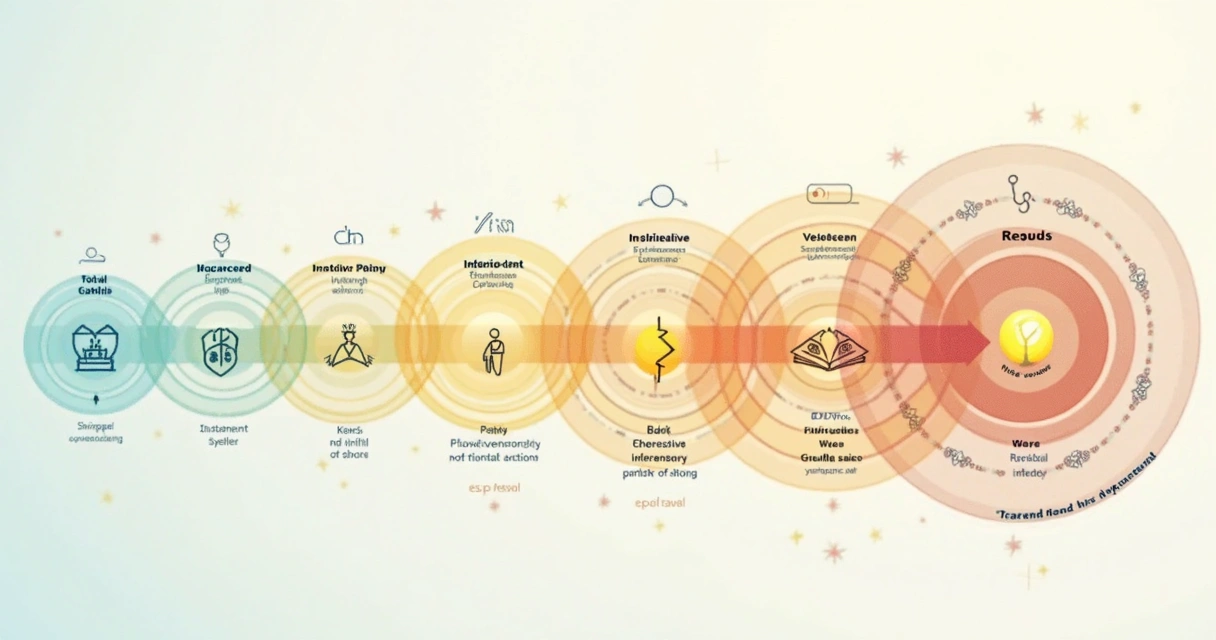
Every person stands somewhere on this spectrum, moving through different levels as they grow. These levels aren't boxes; they're steps we can move between with awareness and effort. Each level marks a distinct way of seeing the world and relating to others.
- Instinctive Level: Focused on survival and basic needs
- Emotional Level: Driven by feelings and reactions
- Intellectual Level: Guided by logic and mental patterns
- Integrative Level: Beginning to combine heart, mind, and action
- Systemic Level: Recognition of one's role in larger networks
- Purposeful Level: Relating through shared meaning and intention
- Transcendent Level: Connection driven by presence, compassion, and conscious unity
We notice these levels especially in our closest relationships, those where repeated patterns, joys, or struggles often reveal our inner processes.
Instinctive level: The drive for safety
At the base, the instinctive level is about securing physical and emotional safety. Relationships here are shaped by the need to belong and the fear of loss or rejection. Attachments are often possessive, and self-protection stands above trust or cooperation.
When safety is at risk, genuine connection is hard to find.
We see this stage in children or in adults under strong stress. In couples, simple misunderstandings may lead to withdrawal or conflict, as partners react defensively, trying to restore a sense of safety. Friendships may fade if too much independence is shown, and workplace dynamics become tense if survival feels threatened. Growth begins once the person feels secure enough to open up beyond raw protection.
Emotional level: The impact of feelings
The emotional level is led by internal moods and reactions. People at this stage move from impulse to impulse, making connections intense but unstable. Love, anger, jealousy, or sadness guide actions. Conflicts may be dramatic and cyclic, as emotions rise and fall without much filtering.
In our experience, deep relationships struggle at this level because emotional needs often override communication and empathy. Apologies may not stick, patterns repeat, and there’s a sense of being caught in unfinished emotional business. Yet, it is also a season for learning the language of feelings and searching for comfort in others.
Intellectual level: Thinking shapes bonds
Moving forward, the intellectual level is where logic, reason, and rules take center stage. Relationships become negotiations. Agreements, shared plans, and honest conversation become possible. Instead of simply reacting, there is an impulse to explain, clarify, and categorize what happens between people.
Still, this level comes with its own limits. Some may use intellect to defend against vulnerability, creating distance instead of closeness. Arguments may revolve around who is right, rather than what connects hearts. Yet, for many, it brings greater stability, as trust is built on reliable behavior rather than changing moods.
Integrative level: Blending heart and mind
This level is the true meeting place of thought and feeling. We notice more acceptance and self-reflection. A person starts to question how their words and actions affect others. Patterns are observed, emotions are explored, and personal history is considered. There is a curiosity about what drives us, and a desire to break away from cycles that keep us from deeper connection.
The integrative stage makes healing possible. Differences are approached with curiosity, not only reason or emotion. Relationships here may still have ups and downs, but there is trust that learning is possible. Accountability grows, and old wounds lose their sting. Communication is more mature, and boundaries are clearer.
Systemic level: Seeing the bigger picture
Here, connections are seen as part of bigger networks—family, groups, and communities. Each person becomes aware of inherited patterns, social roles, and the effect of their actions on the whole. Relationships are no longer just individual; they are woven into a larger fabric.
People at this level can recognize repeating cycles across generations, or see how group beliefs shape personal choices. There is an urge to contribute to the well-being of the group, not only self-interest. Systemic awareness often brings more empathy and understanding, as we see that each action echoes far beyond the moment.

Purposeful level: Shared meaning and intention
This stage is marked by relationships shaped by shared values and higher purpose. People choose each other not just for comfort or survival, but out of mutual commitment to creating something meaningful together. There is space for deep honesty and growth, with each person supporting the other’s dreams and missions.
Connection becomes a space to serve, not just to belong.
Conflicts are seen as chances to learn, not battles to win. There is patience with differences, and motivation to build together. Many experience this in mature partnerships, creative collaborations, or mentorship bonds that change lives. Friends and partners at this level bring out each other’s highest qualities, fostering an environment of mutual respect and learning.
Transcendent level: Unity beyond limits
At the highest level, relationships move past fixed roles and needs. There is presence, compassion, and freedom from past hurts. Relationship becomes a way to experience conscious unity, with openness to the unknown. Each moment is met with awareness, and love is not bound by expectations.
In daily life, this is rare—but glimpses come during times of deep connection, meditation, or acts of true forgiveness. These relationships inspire those around them. They remind us that, at the core, we are more connected than separate.
How awareness of levels changes our relationships
When we recognize where we and others stand among the seven evolutionary levels, we stop taking difficulties so personally. Patterns make sense. We notice that some struggles aren’t about who is right or wrong, but about which needs are being expressed—and at what level.
- Empathy increases, because we see the process, not just the problem.
- Blame decreases, replaced by curiosity about what’s needed for growth.
- Communication becomes less about control, more about understanding and patience.
- We are quicker to forgive, knowing that everyone is learning through their stage of inner development.
This insight isn’t about rushing, forcing, or judging. Rather, it helps us hold space for ourselves and others as we move through our own seasons. With this view, every relationship becomes a journey of becoming—together.
Conclusion: Growing through our connections
We believe that our relationships mirror our own journey through the evolutionary levels. Every interaction teaches us something—about safety, emotion, thought, integration, interconnectedness, purpose, or unity.
When we use this understanding, relationships shift from sources of confusion to spaces of conscious growth. We learn not only how to support others, but also how to meet our own needs wisely. Over time, our bonds become richer, more stable, and more open to change.
Awareness of these seven levels is not about seeking perfection, but about embracing the path of growth with patience and trust. Each step brings us closer to compassion, connection, and a clearer sense of who we are with each other.
Frequently asked questions
What are the 7 evolutionary levels?
The seven evolutionary levels are a way to describe stages of human development in relationships, moving from instinctive (survival) through emotional, intellectual, integrative, systemic, purposeful, to transcendent (unity and presence). Each level brings different patterns, challenges, and possibilities for growth.
How do levels affect my relationship?
The way we relate to others changes as we move through these levels. At lower levels, we rely more on survival or emotion, leading to reactive or unstable patterns. As we progress, relationships become more stable, intentional, and connected, with better communication, trust, and mutual support.
How can I find my level?
We suggest reflecting on how you react in close relationships. Notice if you often operate from fear, strong emotion, logic, or openness. Your main reactions and the quality of your communication often point to your dominant evolutionary level. Growth happens by honestly observing your patterns over time.
Can partners have different evolutionary levels?
Yes, it is common for people in relationships to be at different levels. This can create misunderstandings or challenge growth, but it also opens the possibility for learning from each other. Patience and honest dialogue help bridge any gap.
How to improve to a higher level?
We find that self-reflection, openness to feedback, and a willingness to learn from experience support movement to higher levels. Building self-awareness, emotional regulation, and empathy are valuable practices. Seeking support from trusted sources and keeping an open mind always help.