

Parenting shapes life far beyond a single generation. We have noticed the world’s growing thirst for more aware, connected, and emotionally attuned families. Many seek practical guides but often find only abstract ideas or conflicting advice. What if there is a holistic, science-grounded model that links consciousness, emotion, meaning, and relationship for parents and children?
Conscious parenting begins with self-awareness
Much of what we do as parents happens unconsciously. Our reactions echo personal history, old habits, or deep emotions we have not always resolved. In our studies and support for families, we realized the real change starts within us.
The first step in conscious parenting is increasing our self-awareness—our own internal clarity—so we respond instead of simply reacting to situations. This requires a conscious look at our beliefs, fears, and even our joys as parents. When we sense what is happening inside us, we can break old patterns and open space for more sensitive responses.
"Every conscious change begins with honest self-observation."
We find that taking a few moments daily to reflect or even write about our feelings toward our children shines a light on areas we want to grow. This habit leads to greater authenticity in our relationships at home.
The five pillars of Marquesan theory in parenting
The key value of Marquesan theory is its clear structure, built upon five fully integrated pillars. These act as guideposts for parenting that address the mind, emotion, relationships, and purpose.
1. Living philosophy and meaning in family
Marquesan philosophy views consciousness as a field that expresses itself in choices, relationships, and the meaning we give to life. When we parent from this standpoint, we can help our children find purpose and belonging, not just rules or routines.
- Start each day asking: What feeling do we want to carry as a family today?
- Invite children to reflect on questions of meaning—such as, “What makes you feel proud?” or “Who do you want to help today?”
- Model respect for all beings and for the bigger world around us.
Creating a family philosophy guides actions and helps everyone in the home align with higher intentions, nurturing deeper connection and direction.
2. Emotional maturity through understanding behavior
One of the most powerful frameworks we apply is the understanding of behavior through emotions and personal history. The so-called “9 Pains of the Soul” and “7 Levels of the Evolutionary Process” become tools in observing our children—and ourselves—with more empathy.
For example, when a child is angry, we ask:
- Does this emotion point to an unmet need?
- Is there a deeper pain or a longing for connection?
- Are we reacting out of old woundings as parents?
We find that when we view behavior not as something to correct but as a message to understand, emotional security grows on both sides.
"Children’s actions are often calls for understanding, not signs of defiance."
Seeing behaviors as doors into deeper emotional patterns helps us respond compassionately, encouraging true maturity instead of obedience built on fear.
3. Meditation and presence as daily practice
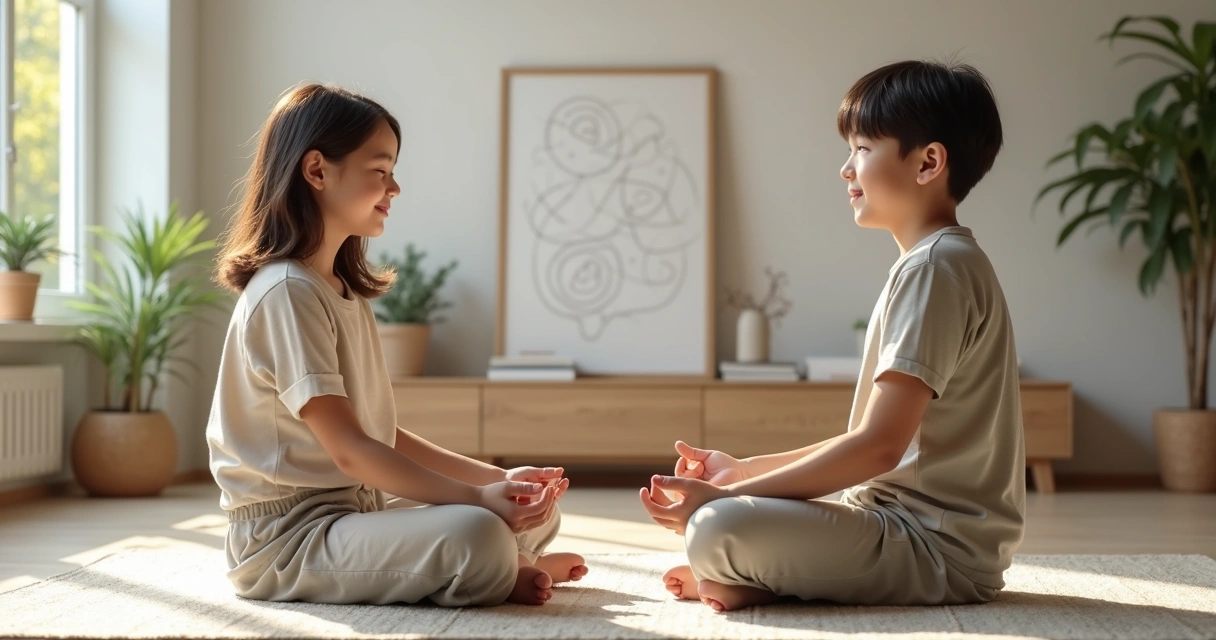
Parenting can feel chaotic. Routine challenges cause stress, and we can lose our balance. That is why we value the practice of meditation, not as an escape, but as a tool for conscious presence in daily life.
- A few minutes of mindful breathing before family transitions (like returning home) helps us reset.
- Guiding children in simple presence exercises or calm observation nurtures focus and emotional balance.
- Shared pauses—silent or with soft music—become islands of peace in the home.

Meditation is a practical tool for parents and children to find internal clarity and connect emotion, intention, and action in everyday moments.
4. Understanding the family as a system
Each of us is part of larger systems—families, friendship circles, communities. Patterns flow through these systems and shape habits, expectations, and destinies. We use the integrative systemic constellation pillar to reveal these hidden dynamics.
For parents, this means recognizing when discomfort or behavior patterns may not be only individual, but are repeated across generations. We ask:
- Are we living out family myths about success, gender, or conflict?
- Do we sense tension that mirrors what our parents faced?
- What strengths are we carrying that can support our children?

By looking honestly at our family systems, we can break negative cycles and build on positive legacies.
5. Expanding values and social awareness at home
We have seen the benefits of redefining value at home. Marquesan human valuation expands the idea of what is worthwhile: not grades, awards, or appearances, but emotional maturity, ethics, and the impact on others.
- Praise acts of kindness and cooperation, not just performance.
- Make decisions as a family that consider fairness and community well-being.
- Encourage critical questions about justice, the environment, and shared purpose.
This pillar connects individual growth with broader social responsibility, preparing children to lead with conscience and compassion.
Bringing it all together: practical tools for every day
While these five pillars might sound broad, we have witnessed and helped implement them in small daily steps that slowly transform family life. Here are a few practical actions parents can try:
- Adopt a daily 3-minute check-in: “How am I feeling? What energy do I want to share?”
- Reflect out loud when mistakes happen: “I got upset. I want to try better next time.”
- Ask open questions to understand (not judge) your child’s choices.
- Create a family ritual, like a gratitude circle or a weekly talk about values.
- Use intentional pauses before responding to tough behavior—ten seconds of silence can change the course of a conversation.
"We plant the seeds of future generations with each word and gesture."By embracing these concepts, we encourage a household founded on respect, presence, and meaning.
Conclusion
We know conscious parenting is both a journey and a set of choices made in thousands of little moments. Through the lens of Marquesan theory, we have found practical ways to connect with our own clarity, nurture deep emotional understanding, and build systems and values that serve not just our families, but the wider world. Every small choice moves us from reaction to response, from old habits to new insight, and from isolation to connected, aware living.
Frequently asked questions
What is conscious parenting in Marquesan theory?
Conscious parenting in Marquesan theory is an approach that views the family as a living system, focusing on self-awareness, emotional maturity, systemic patterns, and shared values. It helps parents align intention, emotion, and action in daily interactions, guiding children through presence and purpose rather than rules alone.
How does Marquesan theory differ from others?
Marquesan theory stands out because it integrates five scientific pillars: philosophy, psychology, meditation, systemic understanding, and human valuation. This allows parents to address not just behavior but also emotions, belief systems, family patterns, and the social impact of their guidance, creating a holistic and sustainable family environment.
How can I practice conscious parenting at home?
You can begin by becoming more aware of your own emotions and reactions, using daily reflection or short meditation. Ask open questions to your children and listen for the feeling underneath their words. Develop family routines that support connection, such as gratitude moments or check-ins about emotions. It is these small, repeated practices that create lasting change.
What are the benefits of this approach?
Families often report greater harmony, more resilient children, and deeper bonds between members. Parents say they react less and respond more often with presence. This approach also helps children grow into adults with purpose, emotional stability, and a strong sense of connectedness to the larger world.
Is conscious parenting worth trying?
In our experience, yes. Engaging in conscious parenting often replaces conflict and confusion with clarity and trust. The process is ongoing and gentle, benefiting not just individual relationships but shaping a more compassionate society over time.