


Many people say, “I do not know why I always ruin good things.” We have heard this in stories about love, work, money, and health. The pattern looks personal, but often its roots are older than the person thinks. They began in the family.
Silent family roles are unwritten positions children take to keep emotional balance at home.
No one sits a child down and assigns a role. It happens through tension, fear, absence, conflict, or pressure. One child becomes the helper. Another becomes the quiet one. Another carries blame. Years pass. The home changes, but the role stays active inside.
Then adult life begins. A person wants peace but starts fights. Wants success but misses deadlines. Wants love but chooses distance. It feels irrational. Yet the behavior may still be loyal to an old family script.
How silent roles are formed
Children are highly sensitive to emotional climates. We think they read much more than words. They notice who explodes, who withdraws, who must be protected, and what gets rewarded.
If a family system is tense, children often adapt in ways that reduce stress around them. This adaptation can look mature from the outside, but inside it may come from fear.
- The peacemaker learns to soften conflict and hide personal needs.
- The achiever learns that worth comes from doing more and feeling less.
- The scapegoat absorbs blame and starts to expect rejection.
- The lost child disappears emotionally to avoid adding weight to the home.
These roles are not fixed categories. Real life is more fluid. Some people move between roles depending on the parent, the setting, or the stage of life. Still, the pattern can remain strong enough to guide choices long after childhood ends.
What protected us can later limit us.
This is where self-sabotage often begins. The person is not simply making bad choices. The person may be repeating a role that once made sense.
When protection turns into sabotage
A child who learned to stay invisible may become an adult who does not ask for a raise, speak up in relationships, or share good ideas. On the surface, it looks like low confidence. At a deeper level, being unseen may still feel safer.
A child who had to earn approval may grow into an adult who overworks, burns out, and then abandons projects out of exhaustion. Another may fear calm relationships because calm once felt unfamiliar. So they create drama without knowing why.
Self-sabotage is often an old survival strategy acting in a new environment.
We have seen this in very human moments. Someone gets close to a healthy partner and suddenly becomes cold. Someone reaches a new level at work and starts procrastinating. Someone receives kindness and mistrusts it at once. The nervous system is not always reacting to the present. Sometimes it is reacting to memory.
Research supports this link between family dysfunction, role formation, and later distress. In two retrospective survey studies on dysfunctional family roles and adult depression, roles such as scapegoat and lost child were linked to higher depressive symptoms in adulthood. That does not mean a role decides a person’s future, but it does show that hidden family positions can leave lasting emotional marks.
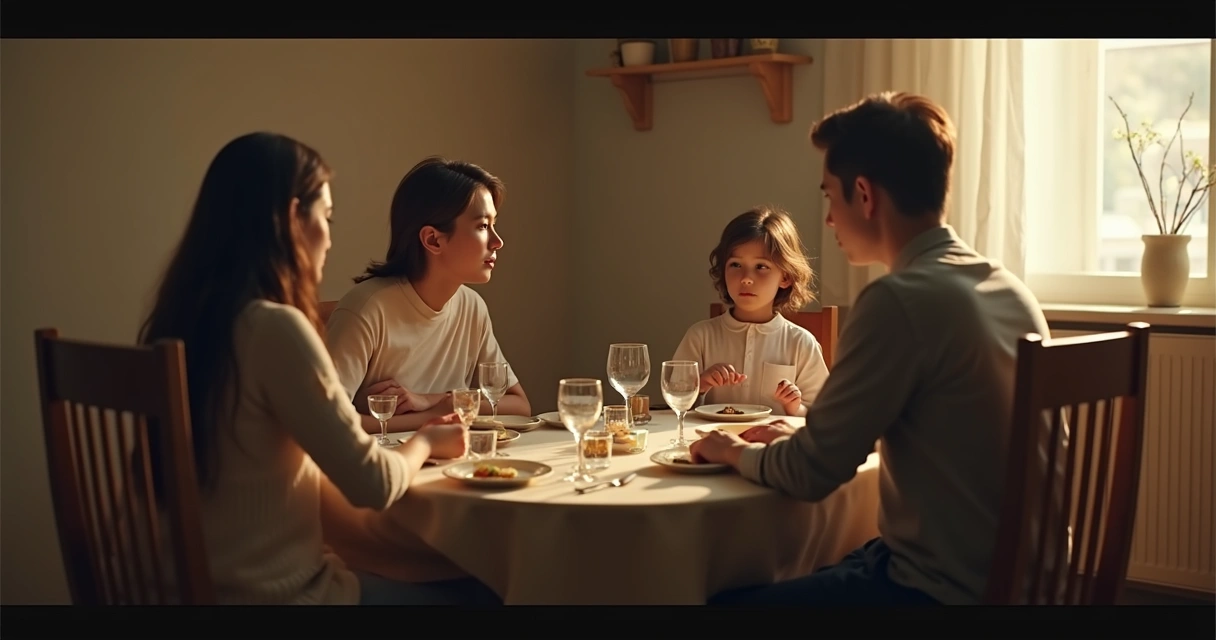
The most common hidden patterns
Not every family role becomes self-sabotage in the same way. The pattern depends on what the person learned about safety, love, and belonging.
Some recurring forms include:
- Stopping ourselves before others can reject us.
- Choosing unavailable partners because closeness feels risky.
- Downplaying our success to avoid guilt or envy.
- Overgiving, then feeling resentment and pulling away.
- Starting change with energy, then quitting when it gets real.
There is often a hidden logic beneath these actions. If, in childhood, success brought pressure, failure may feel safer. If visibility brought criticism, hiding may feel wise. If love came mixed with control, freedom may feel lonely and connection may feel threatening.
This can be hard to admit. Sometimes we even defend the role because it gave us identity. “I am the strong one.” “I am the one who asks for nothing.” “I am the difficult one anyway.” Those sentences sound simple. They carry history.
Why the body keeps the script
Many people try to change through logic alone. They tell themselves to stop overthinking, stop pleasing, stop ruining things. Yet the pattern returns. We think this happens because family roles do not live only in thought. They live in the body, in expectation, in emotional reflex.
A role can become part of how the body predicts danger, even when no danger is present.
That is why healthy situations may feel strangely uncomfortable. Rest can feel wrong to the overfunctioning person. Honest intimacy can feel unsafe to the one trained to hide. Praise can create tension in someone who learned that attention often comes at a cost.
This does not mean we are trapped. It means change needs patience. It also needs honesty. We need to see not only what we do, but what old role the behavior still serves.
Broader studies on adverse care histories point in the same direction. A scoping review on adults with child welfare involvement found higher risks of depression, anxiety, and suicidal behavior than in peers without those histories. Family disruption and insecure early environments do not vanish on their own. They often stay active until they are named and worked through.

How we begin to break the cycle
Change usually starts with recognition, not force. We do not heal by attacking ourselves. We heal by seeing the role clearly and understanding what it once protected.
A useful process often includes a sequence like this:
- Notice repeating problems in love, work, money, or self-worth.
- Name the emotional position beneath the pattern, such as pleasing, hiding, rescuing, or carrying blame.
- Connect that position to early family dynamics.
- Practice new responses in small, real moments.
This is not about blaming parents in a simple way. Families are shaped by stress, trauma, silence, and unfinished pain across generations. Still, understanding context does not require denying impact. We can hold both truths at once.
For many people, healing sounds dramatic. In practice, it is often quiet. It may look like saying no without panic. Finishing a project. Staying present during a hard talk. Letting ourselves be seen without shrinking.
The role is old. You are current.
Conclusion
Silent family roles can shape self-sabotaging behavior in ways that are easy to miss and hard to explain. What looks like laziness may be fear of visibility. What looks like distance may be a learned form of safety. What looks like failure may be loyalty to an old emotional order.
When we understand the role, we stop reading every struggle as a personal flaw. That shift matters. It gives us space to respond with more clarity and less shame. We are not only repeating the past. We are also able to witness it, question it, and choose again.
Awareness is the point where inherited patterns begin to lose control.
Frequently asked questions
What are silent family roles?
Silent family roles are unwritten emotional positions children take within the family system. They often appear in response to stress, conflict, emotional absence, or instability. Examples include the peacemaker, the achiever, the scapegoat, and the lost child.
How do family roles cause self-sabotage?
Family roles can cause self-sabotage when old survival patterns continue into adult life. A person may avoid success, intimacy, rest, or visibility because those experiences feel unsafe at a deep level. The behavior seems irrational in the present, but it often follows an old emotional logic.
Can I change my family role?
Yes, family roles can change. The first step is to recognize the role and the protection it once offered. From there, we can practice new ways of responding, build emotional tolerance, and create choices that fit present reality rather than childhood pressure.
How to recognize my family role?
We can recognize a family role by looking at repeating patterns. Ask where you overfunction, disappear, seek approval, carry blame, or avoid being seen. It also helps to reflect on what your family seemed to expect from you, even without saying it openly.
Are silent family roles lifelong?
No, silent family roles do not have to last for life. They can stay active for many years if they remain unconscious, but awareness and steady inner work can loosen their hold. People can outgrow these roles and build a more free and mature way of living.