

We often hear leaders say, “Our people come first,” “We value integrity,” or “We reward the best ideas.” The words sound right. The wall posters look right too. But daily behavior tells the truth.
Value distortion happens when stated values and lived behavior no longer match.
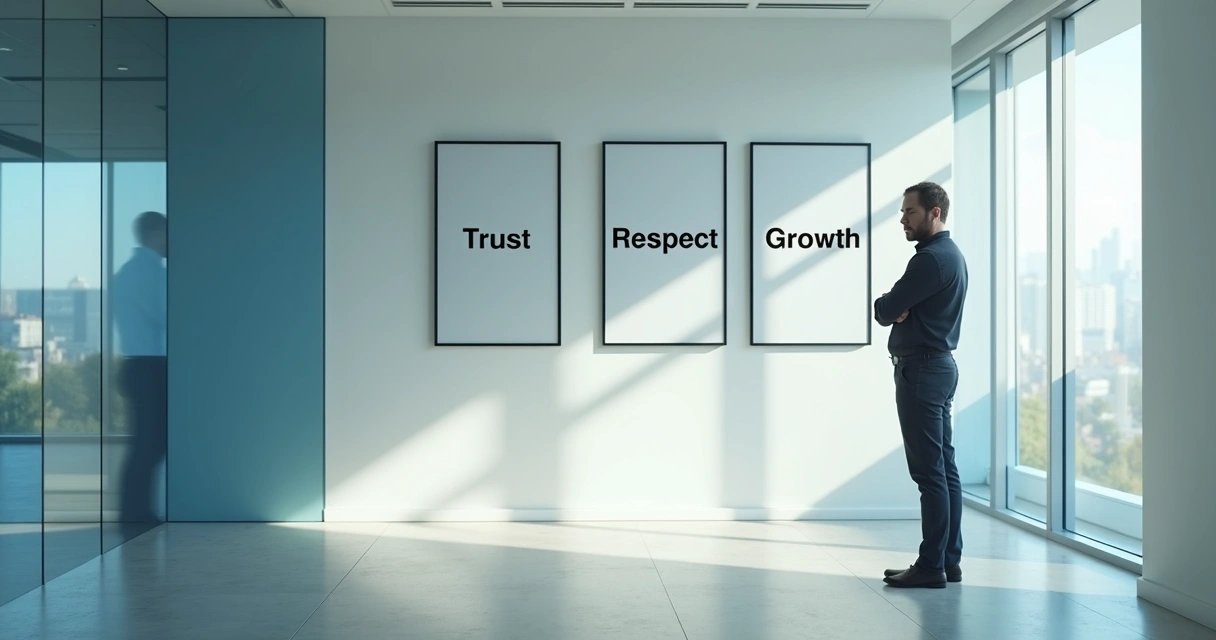
We have seen this pattern many times. A company says it cares about trust, yet people hide mistakes. It says it supports growth, yet punishes honest feedback. It says respect matters, yet a few high performers are allowed to humiliate others. The culture may still function for a while. But something starts to bend inside it.
This is not always loud at first. In many cases, distortion begins in small permissions. A delayed conversation. A biased promotion. A silent meeting after a public insult. Then people adapt. They stop believing what is said and start studying what is tolerated.
What value distortion looks like
Value distortion is not just hypocrisy. It is a deeper shift in how a group decides what is acceptable, rewarded, or ignored. The declared value stays the same, but its meaning gets changed in practice.
For example, accountability can become blame. Collaboration can become forced agreement. Merit can become a cover for favoritism. We think this is where many cultures start losing moral clarity, even while they still look polished from the outside.
Culture speaks through patterns.
Research points to the business weight of culture as well. A field study on corporate culture reported that 92% of executives believe better culture would increase firm value, while 84% say their own culture needs improvement. That gap says a lot. Many organizations know culture shapes value, yet still struggle to live what they claim.
Early signs people usually miss
In our experience, value distortion rarely starts with a formal decision. It starts with repeated exceptions. People notice them quickly, even if they do not name them clearly.
Some signs appear in everyday scenes like these:
A manager asks for openness, then reacts badly when someone speaks honestly.
A team praises balance, but rewards those who are always available and exhausted.
Leaders defend fairness, but promotion rules change depending on who is being judged.
Meetings encourage participation, but decisions are already made before people enter the room.
Respect is spoken of often, while sarcasm and subtle humiliation remain untouched.
When exceptions always favor power, status, or convenience, values are already being distorted.
This matters because people learn culture through consequence, not slogans. They watch who gets rewarded, who gets protected, and who becomes unsafe after telling the truth.

Why distortion becomes normal
One of the hardest parts is this: people can get used to contradiction. When mixed messages continue long enough, teams stop resisting and start adjusting. They become careful, guarded, and selective with truth.
We have seen three common forces behind this process:
Fear of loss. People stay quiet because they fear losing approval, access, or position.
Leader inconsistency. One message is spoken in public, another is lived in private.
Reward confusion. The formal rule says one thing, while incentives push the opposite behavior.
Studies also connect strong culture with adaptability and success. Survey findings on organizational culture and adaptation showed that 81% of executives who felt their organization adapted well also saw culture as a source of advantage. When values are clear and lived, response becomes more coherent. When values are distorted, adaptation often turns reactive and political.
Where distortion hides behind good language
Some of the most harmful value distortion comes wrapped in positive language. This is why it is easy to miss.
A company may talk about merit, for example, and sincerely believe it is fair. Yet fairness can fail when hidden bias shapes reward. Research on the paradox of meritocracy found that even in organizations promoting merit-based cultures, managers gave male employees higher bonuses than equally performing female employees. Good language alone does not protect a culture from distortion.
We think this is a sobering point. A value can sound noble and still be applied in a biased way. So recognition requires more than listening to mission statements. We need to compare language, incentives, and outcomes.
Questions that reveal the truth
When we want to understand whether values are healthy or distorted, we ask simple questions and watch the answers with care.
What behavior gets praise, even when no one says it openly?
Who can break the rules without consequence?
What happens to people who disagree with authority?
Are mistakes treated as learning material or as social danger?
Do formal values appear in hiring, promotion, and conflict decisions?
If values disappear under pressure, they were never fully rooted in the culture.
We once saw a team that described itself as highly collaborative. On paper, it was true. In meetings, everyone spoke politely. But after meetings, real decisions happened in side conversations between a few insiders. That was the real culture. The stated value was collaboration. The lived value was control.
How distortion affects people and results
Culture is not a soft topic with soft effects. It shapes stress, trust, retention, and judgment. When values are bent, people spend energy protecting themselves instead of contributing clearly.
A meta-analysis on organizational culture and effectiveness found positive links between culture types and employee attitudes, operational outcomes, and financial results, though those links are complex. We read that as a useful warning. Culture does not act alone, but it strongly shapes the climate in which people think, decide, and relate.
Common effects of value distortion include:
Lower trust across teams and levels
More defensive communication
Silent resentment after unfair decisions
Reduced willingness to take healthy risks
Emotional fatigue from constant self-censorship
These effects are often visible before they are measured. People become more careful than honest. More compliant than engaged. More present in body than in mind.
How we can respond with clarity
Recognition is the first step, but not the last. Once distortion is visible, the response must be direct and consistent.
We suggest starting with a practical sequence:
Name the gap between declared values and daily behavior.
Review incentives, promotions, and informal power patterns.
Create safe channels for honest feedback without social punishment.
Train leaders to handle discomfort without retaliation or denial.
Track repeated exceptions, because patterns reveal the true code.
This work takes courage. It also takes humility. Some of the distortion will be obvious once seen. Some of it will be hidden inside habits people once thought were normal.
Conclusion
To recognize value distortion in organizational cultures, we must pay less attention to what is declared and more attention to what is reinforced. The real culture appears in moments of tension, conflict, reward, and silence. That is where values become visible.
A healthy culture does not need perfect people, but it does need honest alignment between words, choices, and consequences.
When we learn to notice the gap early, we protect more than reputation. We protect trust, judgment, and the human quality of work itself.
Frequently asked questions
What is value distortion in organizations?
Value distortion in organizations is the gap between stated values and real behavior. It happens when principles like respect, fairness, or accountability are spoken of positively but applied in a twisted or selective way. Over time, people stop trusting the message and start following the hidden rules.
How can I spot value distortion signs?
We can spot value distortion by watching repeated patterns. Look at who gets rewarded, who is protected, how conflict is handled, and what happens when someone speaks honestly. If power or convenience keeps winning over declared principles, there is likely distortion in the culture.
Why does value distortion happen at work?
Value distortion happens at work because fear, bias, weak leadership habits, and mixed incentives slowly reshape behavior. In many cases, leaders do not intend to create distortion, but repeated exceptions and lack of correction allow the culture to drift away from its stated values.
How does value distortion affect teams?
Value distortion affects teams by reducing trust, increasing silence, and making communication more defensive. People begin to protect themselves instead of contributing openly. This can weaken judgment, morale, and cooperation, even when the team still looks stable from the outside.
How to prevent value distortion in culture?
We prevent value distortion by aligning values with daily decisions, incentives, and leadership conduct. That means addressing unfair exceptions, creating safe feedback channels, and checking whether promotions, rewards, and consequences truly reflect the principles the organization claims to hold.