

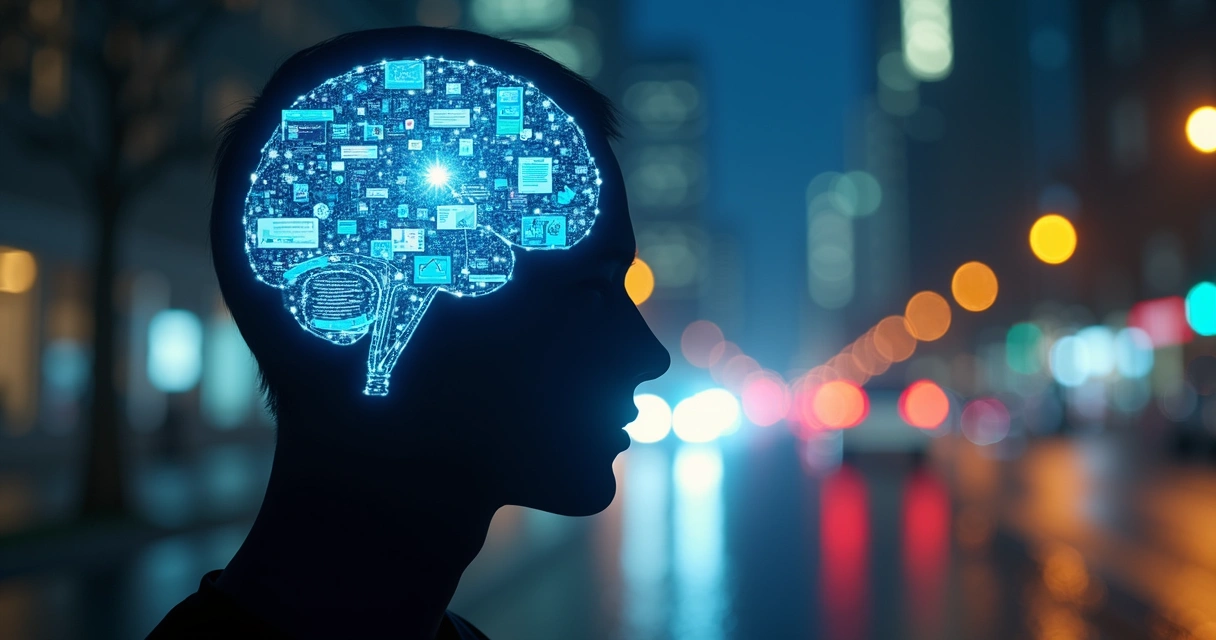
We live with more signals than the human mind was built to process at once. Screens light up before sunrise. Messages arrive while we eat. Videos follow us into the late hours. At first, it feels normal. Then something shifts. We notice that we are present, but not fully here.
Digital overstimulation happens when the volume, speed, and repetition of digital input exceed our mind’s ability to process it with calm and choice.
That is where intentional awareness starts to fade. We stop choosing what deserves attention. We start reacting to whatever appears first. The day fills up, yet our inner direction feels thin.
In our experience, this does not happen in one dramatic moment. It happens in small fragments. A quick check becomes twenty minutes. A planned task is broken by alerts. A quiet evening is filled with background scrolling. None of these events look serious on their own. Together, they train the mind to stay outwardly busy and inwardly scattered.
How the mind loses its center
Intentional awareness is our ability to notice what we are doing, why we are doing it, and whether it matches what we value. It asks for space. It asks for pauses. It asks for enough inner silence to hear our own thought before the next input arrives.
Digital overstimulation works in the opposite direction. It speeds up attention and fragments it. Instead of one clear line of focus, we get many partial starts. We read a message, open a clip, skim a headline, answer a notification, then return to the first task with less mental strength than before.
Noise weakens choice.
We have seen this in ordinary routines. Someone sits down to write one email and ends up jumping through six apps. Another person wants rest, but reaches for the phone every few minutes because stillness now feels strange. The issue is not weak character. The issue is conditioning.
When attention is constantly pulled outward, self-direction becomes harder because the mind stays in response mode.
This has a real effect on focus and well-being. A randomized controlled trial on blocking mobile internet access for two weeks found that people cut daily screen time from about 314 to 161 minutes and showed better sustained attention, fewer mental health symptoms, and higher subjective well-being. The attention gains were large enough to compare with about ten years of age-related decline. We find that result striking because it shows how fast the mind can change when the stream of input slows down.
Why constant input feels rewarding
Part of the problem is that digital stimulation often gives quick emotional rewards. Novelty catches the eye. Alerts create anticipation. Endless feeds remove stopping points. The mind begins to expect frequent shifts. Slow tasks then feel harder, even when they matter more.
This creates a pattern with three common effects:
We become less tolerant of silence and delay.
We confuse mental movement with clarity.
We seek relief in the same tools that drained us.
That last point is painful because it is so familiar. We feel tired, so we scroll. We feel tense, so we switch tabs. We feel lonely, so we search for contact without depth. The device offers contact, novelty, and distraction in seconds. Yet after an hour, many of us feel more diffuse than restored.
There is also the issue of emotional residue. Every piece of content leaves a trace. A tense headline, a polished image, a harsh comment, a funny clip, a sales message. None stays long, but each asks the nervous system to adjust. Over time, the body may remain alert even in quiet moments.

What gets lost when awareness is clouded
When intentional awareness weakens, we do not only lose focus. We also lose depth. We may hear our own thoughts less clearly. We may respond faster but understand ourselves less. We may fill every gap in the day and still feel oddly disconnected from purpose.
Clouded awareness is not the absence of attention. It is attention that has been scattered so widely that it can no longer serve clear intention.
We think this matters because a meaningful life is built through directed moments. Reflection before speech. Presence during work. Care in relationships. Honest rest. If the mind is trained to chase interruption, these simple acts become harder to sustain.
One person we once observed during a workshop said something brief and sharp: “I am always informed, but rarely settled.” That sentence stayed with us. It captures the difference between access and awareness. We can know more facts than ever and still feel less inwardly anchored.
How to recover deliberate attention
The answer is not fear of technology. Digital tools can inform, connect, and support daily life. The real task is to restore proportion. We need forms of use that serve intention instead of replacing it.
In our work, a few practices tend to help because they reduce friction and rebuild internal steadiness.
We can start with this sequence:
Name the high-noise moments of the day. Morning wake-up, work transitions, meals, and late evening are often the main ones.
Create one protected block with no alerts. Even twenty to thirty minutes of single-task focus can retrain attention.
Keep one activity screen-free each day. Walking, eating, writing by hand, or sitting in silence can restore mental pacing.
Notice emotional triggers before grabbing the phone. Boredom, discomfort, and uncertainty often sit underneath impulsive checking.
These steps are simple, but not always easy. At first, reduced stimulation can feel empty. Then a new layer appears. We begin to think in longer lines again. We notice our breathing. We choose instead of just respond.
Attention returns in silence.
We also think it helps to treat rest as active care, not wasted time. The mind does not clear itself while absorbing nonstop input. It clears when there is enough room to settle.

Conclusion
Digital overstimulation clouds intentional awareness because it keeps the mind in a near-constant state of reaction. When inputs are fast, frequent, and emotionally charged, our inner signal becomes harder to hear. We lose clarity not because we lack intelligence, but because our attention is repeatedly pulled away from deliberate choice.
There is good news in this. What is trained can be retrained. As we reduce noise, protect quiet moments, and return to one thing at a time, awareness begins to sharpen again. We feel less driven by impulse and more guided by presence. That shift may look small from the outside. Inside, it changes a great deal.
Frequently asked questions
What is digital overstimulation?
Digital overstimulation is the mental strain that comes from too much digital input in too little time. This includes notifications, social feeds, messages, videos, headlines, and constant screen switching. It can make the mind feel full, restless, and less able to stay with one thought.
How does digital overstimulation affect focus?
It weakens focus by training attention to expect constant change. Instead of staying with one task, the mind begins to scan for the next alert, image, or update. Over time, deep concentration feels harder, and even simple tasks may take more effort to finish.
How can I reduce digital overstimulation?
We suggest starting with small limits that you can keep. Turn off nonurgent alerts, set short periods without screens, avoid checking the phone during meals, and protect part of the morning or evening from digital input. Simple boundaries often work better than extreme rules.
Is digital detox worth it?
For many people, yes. Even a short break can help the mind settle and reset its pace. Research on blocking mobile internet for two weeks showed better attention, improved well-being, and fewer mental health symptoms. A detox does not need to be dramatic to be helpful.
What are signs of digital overstimulation?
Common signs include trouble focusing, checking the phone without thinking, feeling restless in silence, mental fatigue after screen use, poorer sleep, irritability, and a sense of being busy but not clear. If stillness feels uncomfortable, that can also be a sign that the mind is overloaded.