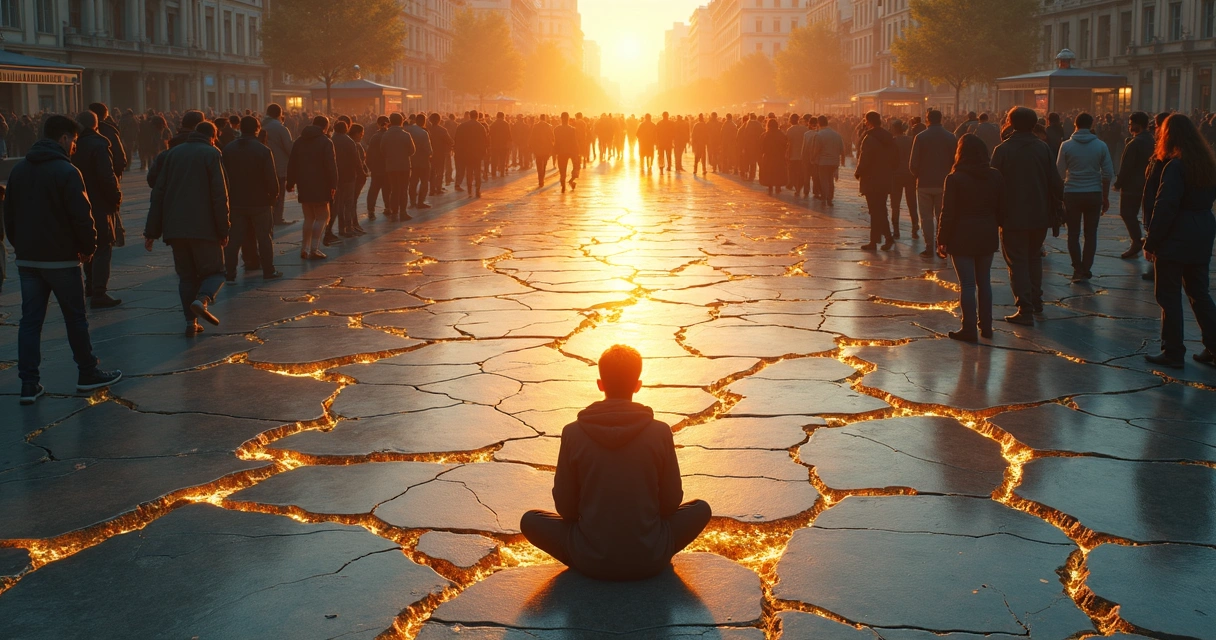
We often speak about trauma as if it lives only inside one person. But many wounds are shared. They move through families, neighborhoods, nations, and generations. A public tragedy, war, forced migration, social violence, disaster, or long periods of fear can shape how whole groups feel, think, and react.
Collective trauma is a shared psychological and emotional impact caused by events that shake a community’s sense of safety, trust, and meaning.
We see its signs in silence at the dinner table, in constant alertness, in distrust between people, and in the way some stories are told while others are buried. A child may not know the full history, yet still grow up carrying tension that did not begin with them. This is one reason personal change cannot always be understood as a purely private process.
At the same time, trauma does not only leave damage. It can also create a serious turning point. Not a romantic one. Not an easy one. But a real one.
Shared pain can change a shared future.
When pain becomes social
Collective trauma appears when many people are affected by the same threat or loss. The event may be sudden, such as an attack or natural disaster. It may also be slow, such as chronic inequality, displacement, or repeated public instability. In our view, what makes the trauma collective is not just the event itself, but the fact that it changes the emotional climate of a group.
People begin to organize life around fear, caution, grief, or numbness. This can shape:
- How families talk about danger
- How communities define belonging
- How institutions respond to stress
- How younger generations inherit emotional patterns
We have seen this in simple moments. A parent reacts strongly to uncertainty. A team avoids conflict because past losses taught them that tension is unsafe. A person feels guilty for resting while everyone around them is still in survival mode. The outer event may be over, but the inner pattern stays active.
Trauma becomes collective when survival responses stop being individual reactions and start becoming group habits.
How shared wounds enter personal life
No one lives outside a system. We absorb signals from the people and structures around us. Their fears can become our reflexes. Their unfinished grief can become our confusion.
This does not mean we are trapped. It means we need a wider lens.
A person may come to a period of crisis thinking, “Something is wrong with me.” Later, they notice that many of their reactions were shaped by a larger field of stress. That discovery can be painful, but also freeing. It reduces shame. It restores context.
Personal effects of collective trauma often include:
- Hypervigilance and trouble relaxing
- Difficulty trusting people or systems
- Emotional numbness
- A fragmented sense of identity
- Strong loyalty patterns that block change
- Fear of joy, success, or visibility
We think this is where transformation begins. Not when pain disappears, but when we can finally name what we have been carrying.
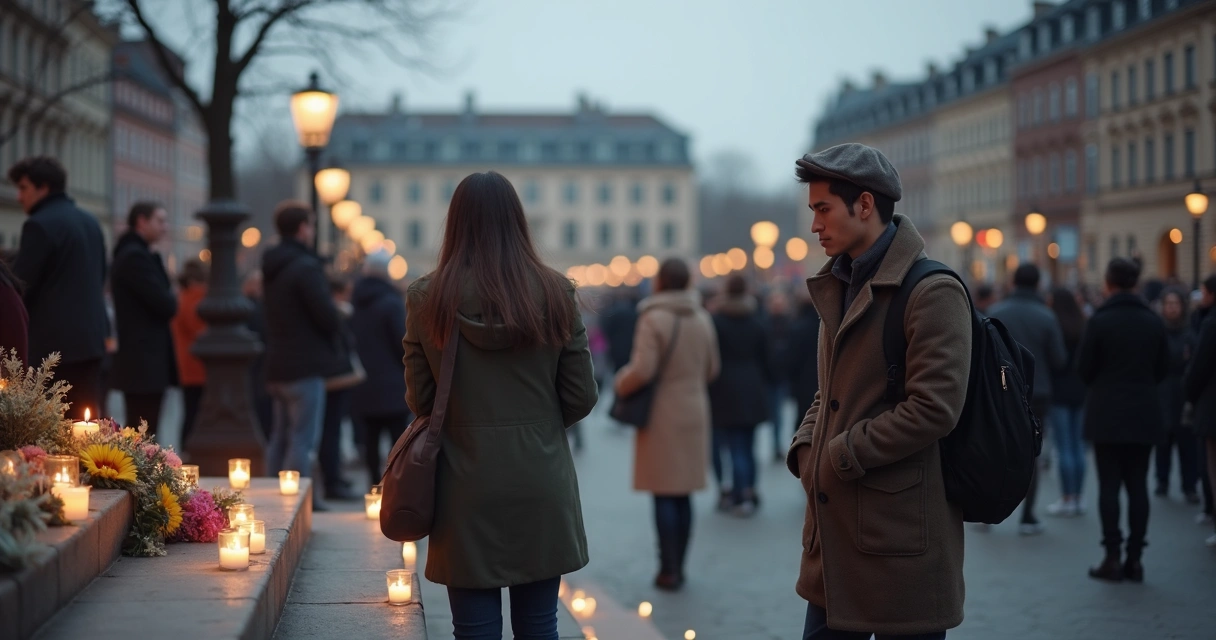
Can trauma open the way for growth?
Yes, but we need to say this with care. Growth does not excuse harm. Pain is not good because it teaches us something. Still, people and groups can grow after deep rupture. They may develop stronger meaning, better boundaries, deeper solidarity, and a clearer sense of what really matters.
A recent peer-reviewed analysis of national resilience during the 7 October 2023 invasion of southern Israel found that national resilience scores rose during the conflict compared with earlier major adversities. The authors read this as a sign of collective post-traumatic growth, with stronger social unity and solidarity. We find this point useful because it shows that shared suffering can, in some conditions, awaken shared strength.
Still, transformation does not happen by accident. A wound can harden people or deepen them. Both paths are possible.
Growth becomes more likely when people have:
- Safe spaces to speak honestly
- Emotional support and reflection
- A sense of shared meaning
- Healthy rituals for grief and repair
- Room to make new choices without betrayal guilt
Personal transformation after trauma often begins when suffering is witnessed, understood, and given direction.
From inherited reaction to conscious response
There is a quiet moment that changes many lives. We know it well. It is when a person notices, perhaps for the first time, “I am reacting to more than the present.” That sentence can break a long chain.
Maybe the body tenses during any disagreement. Maybe success feels dangerous. Maybe closeness feels unstable. These reactions are not random. They often belong to older layers of experience, some personal and some collective.
Transformation asks us to pause between impulse and action. In that pause, we begin to sort what is ours, what was taught to us, and what no longer needs to lead us. This kind of work is slow. It asks for honesty. It also brings relief.
We do not become free by rejecting the past. We become freer by relating to it with awareness.
Awareness breaks repetition.
Practices that support healing
Healing collective trauma is not only a clinical task. It is also relational, cultural, and practical. Personal change becomes more stable when body, emotion, thought, and social bonds are all included.
In our experience, these practices help:
- Pause the overload. Reduce constant exposure to distressing news and repeated triggers.
- Name the story. Put words to what happened and how it shaped your inner world.
- Regulate the body. Breath, stillness, sleep, and grounded routines help calm survival patterns.
- Restore connection. Safe relationships reduce isolation and rebuild trust.
- Create meaning. Reflection, service, or spiritual practice can help integrate loss.
None of this is instant. Some days feel clear, others heavy. That is normal. Healing is rarely linear, and communities also move in waves. A family may begin speaking after years of silence. A workplace may finally address fear that has lived below the surface. A person may stop repeating a pattern that shaped three generations.

Why personal transformation matters to the whole group
When one person heals, the effect does not stop at the individual level. Their way of speaking changes. Their relationships change. Their children, friends, colleagues, and community feel that shift. New responses become possible.
This is why personal transformation is never only personal. It can soften rigid family roles, reduce emotional contagion, and open healthier forms of leadership and care. We think many social tensions continue because too many people are living from inherited alarm rather than present awareness.
Healing does not erase memory. It changes the role memory plays. Instead of forcing repetition, memory can become wisdom.
Conclusion
The link between collective trauma and personal transformation is deep because human beings do not suffer in isolation. We are shaped by shared events, shared meanings, and shared emotional climates. Yet we are not condemned to repeat every wound we inherit.
When we recognize how collective pain lives within personal patterns, we gain a new kind of freedom. We can grieve with more truth. We can respond with more awareness. We can choose not to pass forward what was passed into us without consent.
Transformation after collective trauma is not about becoming untouched by pain, but about becoming more conscious in the way we carry, process, and redirect it.
Frequently asked questions
What is collective trauma?
Collective trauma is the shared emotional and psychological impact of a deeply distressing event on a group, community, or society. It affects not only direct victims but also relationships, trust, culture, and future generations.
How does trauma lead to personal change?
Trauma can interrupt old assumptions and force people to question how they live, relate, and make meaning. With support and reflection, this disruption can lead to greater self-awareness, emotional maturity, stronger boundaries, and new life choices.
Can collective trauma affect everyone?
Yes, collective trauma can affect people in different ways, even if they were not at the center of the event. Some feel fear or grief directly, while others absorb tension through family patterns, media exposure, social change, or community instability.
How to heal from collective trauma?
Healing often involves emotional support, body regulation, honest conversation, grief work, safe relationships, and meaning-making practices. It also helps to reduce overload, build stable routines, and seek professional care when needed.
Is personal transformation after trauma common?
It is common for people to change after trauma, but the direction of that change varies. Some become more defended, while others grow in clarity, compassion, and resilience. Growth is possible, especially when pain is processed rather than avoided.