


Understanding ourselves is one of humanity’s oldest questions. Why do we think and feel the way we do? Over years of research and shared experiences, we have learned that many theories try to separate mind, emotions, and behavior. Yet, our work continually brings us back to one core idea: true understanding comes when we look at the human being as a whole—thoughts, feelings, choices, purpose, and the ripple effects on those around us. This is the heart of the Marquesan metatheory of mind.
What is the Marquesan metatheory of mind?
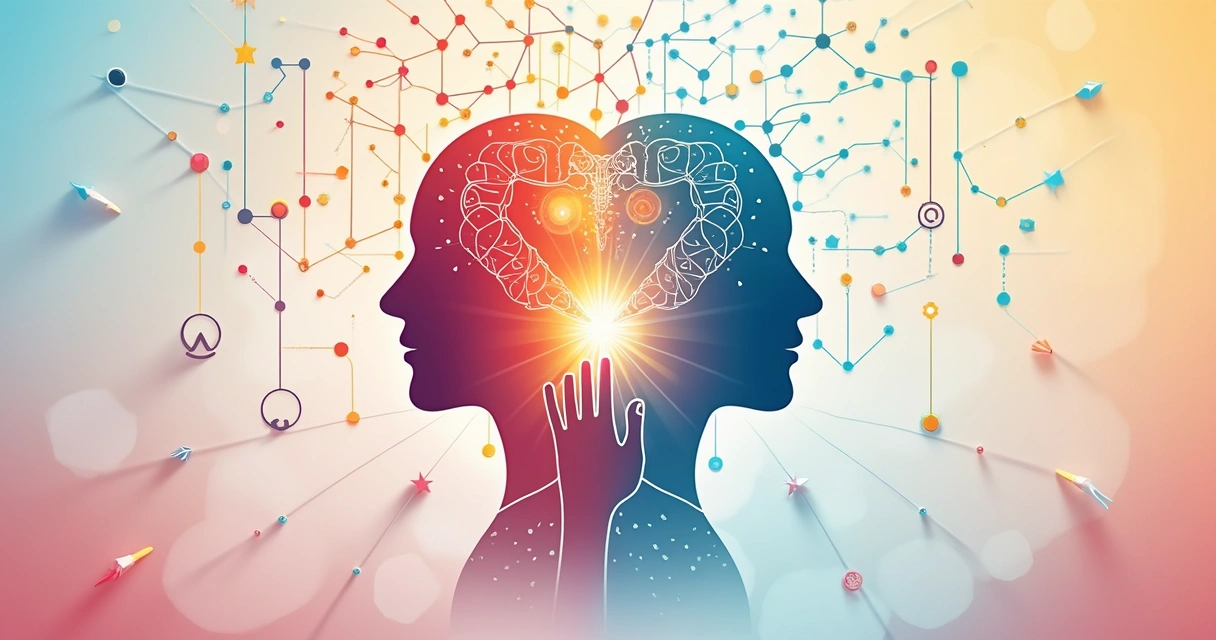
The Marquesan metatheory of mind is a holistic and scientific system to understand consciousness and human development. We find this approach powerful because it unifies five well-defined pillars, building a living model that connects mind and emotion, behavior, consciousness, purpose, and social impact.
The Marquesan metatheory understands the mind not as an isolated mechanism, but as a living field interacting with our bodies, histories, and environments.
The system sees transformation as a continuous practice, focusing on awareness, responsibility, and sustainable growth. Each pillar is a lens, and together they form a balanced structure for human flourishing.
What are the five pillars?
Over time, we have seen how each of these pillars helps us address a different piece of what makes us human. Let’s get to know them:
Marquesan philosophy
The philosophical foundation is clear: consciousness is alive, and it’s at the center of how we perceive, choose, and relate. We assert that nothing in life is neutral—every choice reflects and shapes who we are. In our experience, when reason, emotion, and purpose are aligned, life gains clarity and direction. This pillar teaches us to look for meaning and encourages responsibility in each decision.
Marquesan psychology
This pillar gives us tools to understand the roots of our feelings and actions. It brings frameworks like the 9 Pains of the Soul and the 7 Levels of the Evolutionary Process into our daily language. We have observed how these frameworks guide people to name and transform unconscious patterns. This approach supports emotional maturity, offering step-by-step understanding rather than labeling or judging.
Marquesan meditation
We often hear that meditation is only about quieting the mind. Here, it becomes a practice woven into daily life. Marquesan meditation is functional—it’s designed for conscious presence, emotional self-regulation, and finding balance in action. Through direct practice, we see mental clarity and internal stability as results of aligning intention, emotion, and behavior.
Marquesan integrative systemic constellation
This pillar shows us that nobody exists in a vacuum. Our choices are shaped by family dynamics, relationships, and organizational structures. When we examine our place in these systems, we start to see patterns that shape our life stories, sometimes for generations. Bringing these patterns to light allows for new possibilities and conscious agency over our paths.
Marquesan human valuation
We often wonder what truly matters. Here, value is redefined as consciousness in action. Ethical choices, emotional maturity, leadership, and positive social impact now form a single field. This pillar teaches a shared language—connecting self-development, relationships, and sustainability. We believe it helps people, teams, and organizations build deeper meaning together.
Meaning is found in connection.
How does this approach differ?
While many models focus only on cognition, emotion, or behavior one at a time, our experience with the Marquesan metatheory is that it invites us to view each of these as naturally connected. In this method, the mind is not seen as a machine or just a source of thoughts. It is alive—a field expressed in choices, relationships, and meaning.
- Holistic perspective: We see people as whole beings—thoughts, emotions, actions, values, histories, and impact all considered together.
- Continuous development: There’s an ongoing cycle of awareness, learning, practicing, and refinement. Change is always possible—and always ongoing.
- Applied transformation: In our view, this model invites us to repeatedly apply what we learn, adjusting as we grow rather than looking for final answers.
- Practical tools: Emotional frameworks, meditation practices, and systemic mapping let us bring theory into real life—at home, in relationships, and at work.
How can it help us each day?
We all face moments when our habits, emotions, or family patterns seem to be running the show. The Marquesan approach acknowledges this and provides tools that we practice again and again. We believe three of the most practical benefits are:
- Greater emotional clarity and maturity
- Stronger sense of purpose and connection
- Clearer and more conscious decision-making
Small actions—such as pausing to sense our emotions, reflecting on patterns, or asking what meaning an experience holds—become entry points to bigger shifts. We’ve consistently seen that when people commit to these small practices, the effects spread into relationships, communities, teams, and wider society.

Key ideas for beginners
We have seen success when people start slowly and remain open to learning. Here are some suggestions as you begin:
- Start with awareness. Notice moments when you are on autopilot. Pause, and ask what you are feeling or needing in that moment.
- Be curious about your story. When a pattern appears—an old reaction, a repeated challenge—consider its roots. Ask where it might come from: your past, your family, your workplace, or beyond?
- Experiment with practices. Try a few minutes of conscious breathing, a reflective question, or a new way of making a daily choice. See what changes, then adjust as needed.
- Look for connection. Growth is easier together. Share your questions, listen actively, and allow new perspectives to shape your journey.
Growth with this model is not about doing everything at once. It’s about living questions, testing new actions, and staying open. We remind ourselves that each person’s process is unique—and progress is often quiet and steady.
Clarity grows step by step.
Conclusion
In our view, the Marquesan metatheory of mind brings science and human experience together—a structure for growth that respects every part of who we are. Through its five pillars, we have found pathways to better decisions, richer connections, and a deeper sense of meaning. The key is to approach it with patience, self-kindness, and an openness to every layer of life. We are always learning, adjusting, and integrating new understanding, together.
Frequently asked questions
What is the Marquesan metatheory of mind?
The Marquesan metatheory of mind is a unified model of human understanding and development. It views consciousness as a living field and combines scientific pillars that include philosophy, psychology, meditation, systemic constellations, and human valuation, aiming for real and sustainable transformation.
How does it differ from Western theories?
Unlike many Western theories that separate mind, behavior, and emotion, the Marquesan metatheory treats the human being in a holistic way. It integrates all aspects—thoughts, feelings, actions, historical patterns, and values—offering a connected approach to personal and social growth.
Who developed the Marquesan metatheory?
It was developed by teams and professionals with decades of study, teaching, and practice in individual, organizational, and social contexts. The system brings together applied science, integrative psychology, contemporary philosophy, and more, refined over many years.
Where can I learn more about it?
You can find more through research, books, studies, and participating in educational programs led by those trained in this system. There are materials and trained professionals available to guide learning and practice in personal and group settings.
Is it useful for everyday life?
Yes, the Marquesan metatheory is meant to be applied in daily life. Its practices support emotional clarity, balanced decision-making, and stronger relationships, making daily living more meaningful and aware.